The LEGO Propaganda Machine
During the 2026 US–Iran conflict, LEGO-style AI cartoons mocking Donald Trump flooded TikTok, X and Instagram — watched by tens of millions of people who never follow Middle East news.
Who made them, how far they really spread, and what's proven versus hyped — in 9 cards. Every card links out if you want the rabbit hole.
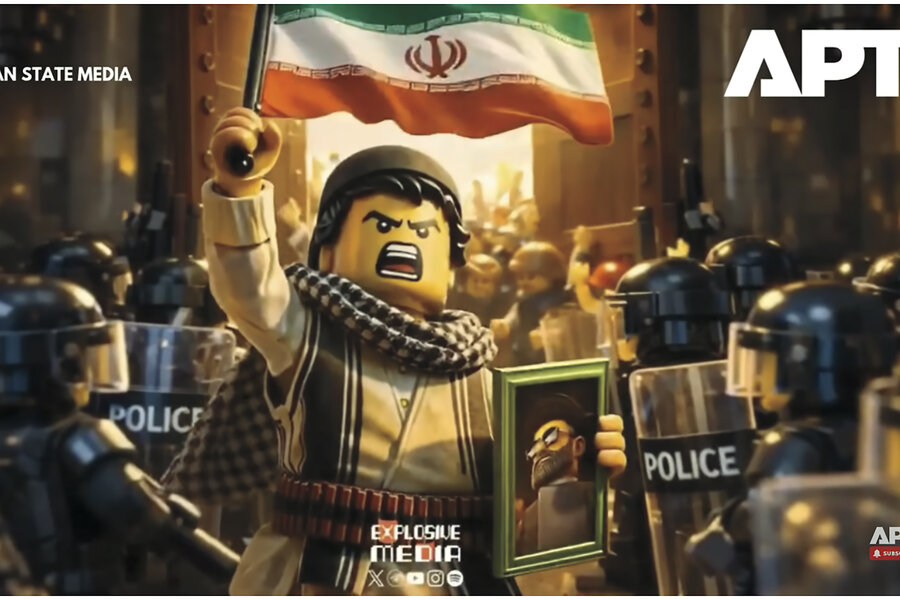
Explosive Media — also "Explosive News" / "Akhbar Enfejari" — started in 2025 with Farsi political commentary that barely registered. The name echoes Khomeini's line: "Propaganda is explosive as a grenade."
They told reporters they're student-run and independent — while soliciting crypto donations. That self-description is contested.
Canada's Rapid Response Mechanism dates the shift to March 7, 2026: out went human hosts, in came generative-AI LEGO videos in English.
The breakout track "L.O.S.E.R." flips MAGA into MIGA — "Make Iran Great Again" — over a sweating Trump at a casino, lost in an Iranian-flag maze, cornered about the Epstein files.
- Cheap AI production — near-daily output
- Rapid response — lyrics reworked within hours of events
- US pop-culture fluency — trap beats, diss-track conventions
- Entertainment packaging — jokes lower defenses
The team says the LEGO look was chosen after testing options, to "create contrast": "It lowers resistance and invites curiosity."
The smoking gun: a team representative admitted to the BBC that the Iranian government was a client. RRM adds personnel and network links; the IRGC shared a LEGO-style video as far back as 2024; early amplification came from Iranian and Russian state media.
Iran's own news agency praised the "victory in the soft war."
What's not proven: that every video was government-ordered, or any China connection.
The videos carry allegations of antisemitic imagery, conspiracy narratives, unsupported war claims and factual errors. Entertainment packaging reduces the urge to fact-check — researchers call the genre "slopaganda" (AI slop × propaganda, 2025).
April 2026: YouTube terminated the channel — first cited as violent content, later as spam and deceptive practices. Accounts on X, Instagram, TikTok and Telegram stayed up.
Saturating a feed doesn't flip opinions one video at a time. It sets the frame people argue inside — which is what persuasion mostly is at scale.
AP still calls measured attitude change unclear — watching, reposting, even mocking isn't agreeing. Meanwhile the White House's own AI posts were judged "behind the curve": good at showing bombing, weak at telling a story.
Ten twenty-somethings with AI tools out-messaged a superpower's government — in its own language and culture. Whether minds changed is unknown; that the playbook is now copyable by anyone is not.
Canada RRM — the state-attribution report CS Monitor — inside the campaign BBC — interview with the maker WIRED — the meme machine profile Al Jazeera — "Vengeance for all" AP — why influence is unclear TIME — when virality is the message "Slopaganda" — the 2025 paper Wikipedia — Explosive Media